Brampton Office Cleaning Experts
Food safety and commercial cleaning experts in Brampton support your business in maintaining dining venues, food supply centers, baking operations, warehouses, and food service units in compliance. They sanitize frequently touched areas, food-contact surfaces, equipment, floors, drains, restrooms, and prep areas with approved chemicals, correct concentration, and documented exposure durations.
Essential Summary
- Sanitation specialists in Brampton cater to restaurants, grocery departments, commissaries, warehouses, bakeries, schools, mobile vendors, and allergen-sensitive operations.
- Cross-contamination avoidance is achieved by sanitizing frequently contacted areas, food-contact equipment, kitchens, floors, drains, restrooms, and storage areas with area-specific procedures.
- Validation of approved sanitizer dilution, suitability, and contact time is conducted by qualified providers, with completion recorded using samples, reviews, and corrective-action records.
- Danger, throughput, changeovers, releases, and standards ought to guide sanitation plans, with daily, recurring, and annual operations assigned by area.
- Prioritize suppliers showing hazard analysis knowledge, public-health competency, WHMIS preparation, insurance, references, color-coded instruments, and assessment-ready cleaning paperwork.
Brampton Facilities That Need Food Safety Cleaning: Which Ones?
Food safety cleaning is required for any Brampton facility that deals with, keeps, prepares, packages, or provides food. Apply it to your business if it comes under health inspections, food codes, or HACCP requirements. This includes dining establishments, break rooms, distribution centers, market departments, meat shops, fish areas, stores, and food prep kitchens.
You'll furthermore need adherent sanitation standards in storage centers, processing facilities, refrigerated warehouses, bakery retailers, school nutrition programs, event halls, and delivery centers. Portable business models matter as well, such as mobile kitchens, market vendors, and seasonal booths. Should your staff prepare supplies, portion finished foods, reheat items, or manage allergen inventory, your facility requires documented cleaning protocols. In Brampton, hygiene remains necessary; it represents regulatory, business, and safety adherence.
What Do Brampton Cleaning Professionals Handle?
Your operation needs cleaning professionals who disinfect frequently contacted surfaces, kitchens, floors, and toilet facilities to maintain food safety compliance and public health standards. These zones receive attention because they represent the most significant contamination risk, hazardous walking conditions, and breaches of sanitation codes.
When you know their cleaning scope, you can ensure your operation's cleaning procedures satisfy compliance and operational standards.
Important High-Touch Surface Sterilization
Expert Brampton cleaners understand that high-touch surfaces call for disinfection since these areas harbor microbes and organic residue. You require a scheduling system for sanitizing all high-touch items including handles, plates, switches, railings, control surfaces, POS systems, and refrigeration equipment. Applying contact point analysis, professionals locate every frequently handled area and set cleaning timing
verify effective sanitization
Cooking Zones, Walking Surfaces, and Restroom Environments
Brampton cleaning services zero in on kitchens, floors, and restrooms as each zone involves distinct food safety, slip-and-fall, and wellness concerns. In industrial kitchens, you need degreasing on cook lines, equipment exteriors, drains, prep surfaces, and splash zones to minimize bacterial growth and pest activity.
Floor care that is documented should also be anticipated. Technicians clean and remove buildup from grout, tile, and vinyl flooring, then apply suitable dehydration methods so you can reduce slip incidents and maintain code-compliant conditions. They also handle entryways where moisture and debris migrate indoors.
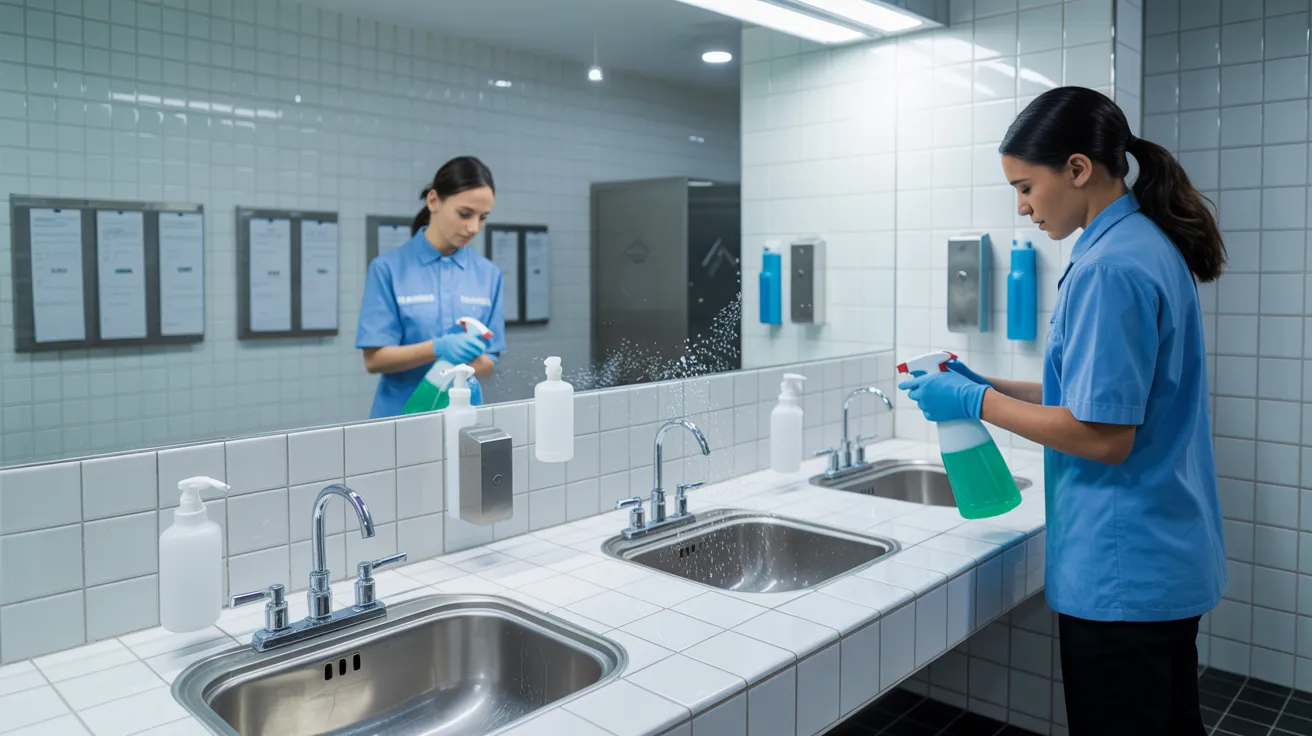
Restroom cleaning involves disinfecting surfaces, fittings, separators, dispensers, and containers, restocking supplies and controlling odours. They also service restaurant moprooms, where chemical storage, sink hygiene, and drainage conditions can affect sanitation compliance and staff safety daily.
Why Food Safety Cleaning Matters in Brampton
Brampton businesses need to establish proper sanitation practices for satisfying legal standards and obtaining approval. You also minimize cross-contamination by cleaning and sanitizing food-contact surfaces, equipment, and high-touch areas correctly. Most importantly, you help protect community wellness by reducing the chance of food poisoning in your establishment.
Food Safety Regulations
Because Brampton food companies operate under rigorous sanitary regulations, food safety cleaning directly influences your capacity to satisfy health code requirements, safeguard customers, and eliminate enforcement action. You must maintain clean food preparation areas, written maintenance records, appropriate product handling, and documented employee protocols that meet municipal and provincial inspection expectations.
Good hygiene practices enables cross-contamination prevention by reducing contaminants on shared equipment and frequently touched surfaces.
Cross-Contamination Prevention
Meeting health code standards also depends on your ability to prevent cross-contamination during daily food handling and cleaning. You must keep raw items away from prepared dishes, clean work areas after each use, and store chemicals away from food-contact items. Clear procedures reduce transfer risks and support consistent compliance during inspections.
Building allergen isolation prevents key allergens from reaching common workstations, storage, or apparatus. Utilize dedicated cutting boards, color-coded tools, and strict utensil labeling so team members won't blend products in cooking or serving.Mandate hand cleaning following raw meat, seafood, eggs, or allergen-containing products. Swap wiping cloths regularly, and confirm disinfectant efficacy using test strips. When your team follows these practices every shift, you foster a cleaner, more secure operation that exceeds Brampton's safety standards daily.
Public Health Protection
Should cleaning standards collapse, you don't simply risk a failed inspection—you expand the odds of contamination-related sickness harming customers, staff, and the wider Brampton population. You also weaken your role in protecting public health, especially in high-traffic food premises where contamination can spread quickly through surfaces, equipment, and touchpoints.
You must implement cleaning procedures that remove soils, properly disinfect, and ensure effectiveness. This entails adhering to exposure times, utilizing authorized sanitizers, recording schedules, and coaching staff to meet health-unit expectations. These initiatives promote pathogen control by reducing microbes before contaminating food or hands. In Brampton, robust sanitation shields vulnerable populations, minimizes disease spread, and proves your diligence. When you maintain standards, you go beyond regulations—you substantially reduce risk and advance safer food handling across the region.
How Can Cleaning Practices Ensure Food Safety Compliance?
Following comprehensive cleaning schedules improves food safety compliance by reducing contamination risks, preventing pathogen multiplication, and ensuring your facility complies with sanitation requirements under HACCP-based programs and public health regulations. You validate that product-contact areas appear visibly clean and microbiologically controlled, supporting documented preventive controls and inspection readiness.
Cleaning programs additionally bolster allergen prevention by eliminating residues that can lead to undeclared allergen exposure.
What's the Ideal Time to Plan Commercial Cleaning?
high-volume production periods, product switches, spill events
Occasional tasks ought to be planned separately
Selecting the Right Brampton Cleaning Experts: Key Considerations
Start by screening providers against food sanitation standards, not price alone. You should verify that each company understands CFIA, public health, and HACCP-aligned expectations relevant to your facility. Ask for insurance documentation, WHMIS compliance, documented staff training, and supervision practices. Review whether technicians understand contamination prevention, chemical handling, and traceable sanitation records.
Additionally, you need to evaluate service dependability and accountability. Obtain references from food facilities in Brampton, then review service speed, corrective-action procedures, and communication practices. Verify the company conducts supplier reviews and can deliver compliance-ready records when inspectors or external parties need proof. Verify equipment upkeep, color-coded equipment are applied correctly, and site-specific hazards are identified. A qualified provider protects compliance, product integrity, and your reputation.
What details should a sanitation plan include?
Document a plan that outlines every sanitation activity, guideline, and role before starting production. You should include cleaning frequencies, approved chemicals, dilution rates, contact times, tools, and verification methods for each zone, surface, and piece of equipment. Remember to add pre-operational inspections, corrective actions, and employee training requirements.
Your plan should also include cross-contamination controls, waste handling, pest-prevention measures, and documented schedules for restrooms, drains, floors, and food-contact areas. Specify how you'll separate raw and ready-to-eat processes, support ingredient tracking, and maintain accurate allergen labeling through validated cleaning between product changes. You should establish accountability, preserve signed records, and check results against regulatory standards, HACCP controls, and customer requirements. When gaps appear, revise procedures immediately and retrain staff.
Frequently Asked Questions about the Plan
Can cleaning services accommodate nighttime operations in Brampton properties?
Yes, you can schedule cleaning services to accommodate overnight shifts in Brampton facilities. You'll coordinate overnight sanitation around operational schedules, access controls, and personnel needs. Providers typically map overnight procedures to reduce disruption, ensure adherence, and record finished work. You should confirm response times, oversight, lockout procedures, and waste handling before service begins.
Can Brampton cleaning experts handle emergency spill response?
Yes, you can expect Brampton cleaning experts who provide hazard containment solutions. They manage hazardous materials, assess risks, isolate affected areas, and begin swift cleanup to reduce exposure and prevent business interruption. You should verify arrival timeframes, professional credentials, PPE protocols, and waste management. If your facility must meet regulatory requirements, choose a provider that documents incidents, follows compliant standards, and enables compliance verification.
Do plant-based disinfectants work safely on food-contact surfaces?
In essence, plant-based sanitizers prove safe for food preparation areas provided you source items marked food-safe that comply with regulatory compliant. Check exposure duration, dilution ratios, and rinse protocols in advance of use. Plant-derived products decrease toxic chemical contact, although you should obtain demonstration of efficacy against relevant pathogens. To preserve surfaces without residue, stick to exact manufacturer guidelines and ensure the sanitizer complies with applicable food industry sanitation standards.
Will sanitation programs adapt to seasonal variations?
Certainly, cleaning schedules accommodate seasonal shifts readily. Adapt frequencies, labor allocation, sanitizers, and confirmation procedures to correspond with seasonal patterns while maintaining regulatory compliance. Reduce operational delays through scheduling sanitization around changeovers, high demand periods, and usage cycles. Additionally modify standard operating procedures, instruction programs, and monitoring protocols to address periodic risks, additional allergens, or increased soil loads. Scheduled reviews ensure the plan efficient.
Do commercial cleaners train staff on hygiene standards?
Yes, professional cleaning services often train your staff on sanitation best practices. You receive staff training on correct chemical application, contact times, cross-contamination prevention, equipment disassembly, and documentation. They generally follow training with HACCP, GMP, and CFIA or regional health department requirements. Many also conduct sanitation audits to confirm adherence, identify gaps, and reinforce corrective actions. This helps you sustain uniform processes, pass inspections, and reduce food safety risks daily.
Final Thoughts
Partnering with Brampton commercial cleaning and food safety professionals goes beyond tidying—it ensures your facility stays inspection-compliant and your helpful guide standards are defensible. From kitchen areas to production zones, each cleaned area and organized section lessens contamination risk and prevents major expenses. By arranging service at suitable frequencies and implementing a thorough cleaning program, you protect your workforce, clients, and your image. In a heavily regulated sector, clean environments are non-negotiable—they're critical to business success.